A customer calls about a billing error for the third time. She's not yelling — her voice is tight, sentences clipped, pace accelerating. A traditional voice AI misses all of that. It greets her with the same upbeat script it uses for everyone: "Thanks for calling! How can I make your day great?"
Her frustration doubles.
An emotion-aware system catches those acoustic signals within three seconds. It drops the cheerful tone, acknowledges the repeat contact, and leads with urgency: "I see you've called about this before. Let me get this resolved for you right now." Her tension drops. The call resolves in four minutes instead of twelve. No escalation.
That gap — between hearing words and understanding the human behind them — is where the next generation of voice AI is being won or lost. And the stakes are bigger than most teams realize.
Why Does Emotion-Blind AI Keep Failing Customers?
Because it treats every caller identically regardless of emotional state, and human communication encodes 25-40% of its meaning in tone, pace, and prosody — signals that word-only systems throw away entirely. The result: frustrated callers get cheerful scripts, anxious customers get rushed through flows, and preventable escalations eat your support budget.
The numbers back this up. Research from Deloitte's global contact center surveys consistently shows that emotional mismatch triggers negative reactions in 45-60% of emotionally-charged interactions. A 2024 Qualtrics XM Institute study found that customers who felt a company didn't understand their emotional state were 3.5x more likely to decrease spending.
Here's what emotion-blind systems get wrong in practice:
Tone-deaf responses. The same cheerful greeting for a customer reporting fraud and a customer checking their balance. One needs urgency and reassurance. The other is fine with friendliness. Identical treatment fails both.
Missed escalation windows. Without emotion detection, systems can't identify when frustration is building. By the time a customer explicitly says "let me speak to a manager," the relationship damage is already done. Analysis from NICE's 2024 CX report shows that 30-40% of escalations could be prevented by earlier emotion-aware intervention — catching it in the first 30-45 seconds instead of the last 30.
Lost communication bandwidth. Prosody research dating back to Mehrabian's work and confirmed by modern studies in the Journal of Nonverbal Behavior shows that emotional tone carries substantial communication meaning. Voice AI that ignores pitch, rhythm, and volume is operating with a fraction of the available information.
Satisfaction crater. Customer experience data from Medallia and Forrester consistently shows that emotion-inappropriate responses decrease satisfaction scores by 15-25 points compared to emotion-matched interactions. That's not a rounding error — it's the difference between a promoter and a detractor.
How Voice AI Actually Detects Emotion
Emotion detection in voice AI works by fusing two signal streams — acoustic features (how you sound) and linguistic content (what you say) — and tracking how both change over the course of a conversation. Modern systems process this in under 150 milliseconds, fast enough to adapt mid-response.
Let's break down each layer.
Acoustic emotion recognition
Your voice physically changes when you're emotional. Anger raises pitch, speeds up speech, and increases volume. Sadness does the opposite — lower pitch, slower pace, quieter delivery. Anxiety shows as increasing speech rate and tighter vocal quality. These aren't subtle signals. Machine learning models trained on labeled speech datasets detect them with 70-85% accuracy on clear audio.
The acoustic features that matter most:
- Prosody — pitch contour, speaking rate, volume envelope, rhythm patterns
- Voice quality — spectral features, jitter, shimmer, harmonic-to-noise ratio (stress physically tightens vocal muscles, changing resonance)
- Temporal dynamics — how features evolve across utterances, not just instantaneous snapshots
That last point is critical. A single frustrated sentence could be a momentary reaction. A progressive tightening of voice quality over thirty seconds signals a trajectory — the customer is getting worse, not better. Systems that track emotional trajectory outperform snapshot-based approaches by a significant margin, according to research published in IEEE Transactions on Affective Computing.
NLP sentiment and emotion classification
Acoustic analysis tells you how someone sounds. Natural language processing tells you what they're saying — and the gap between those two signals is where the most interesting detection happens.
Modern transformer-based sentiment models hit 85-92% accuracy on general classification (positive/negative/neutral). Domain-specific models trained on customer service transcripts push that to 88-94%, as shown in benchmarks from the SemEval shared tasks. Emotion classification — identifying specific states like anger, fear, joy, or confusion — sits at 75-85% accuracy with current architectures.
But the real power is contextual understanding. A customer saying "this is the third time I've called" uses neutral words. The sentiment is clear only if you know the conversation history. Context-aware models that maintain state across a conversation show 15-20 percentage point accuracy improvements over utterance-level analysis, per findings in the ACL Anthology.
Multimodal fusion
The best production systems don't choose between acoustic and linguistic signals — they fuse both. When angry words arrive in an angry tone, confidence skyrockets. When positive words arrive in a flat, tired tone, the system detects the mismatch and flags potential sarcasm or suppressed frustration.
Feature fusion improves detection accuracy by 10-15 percentage points compared to either modality alone, according to research from the International Conference on Acoustics, Speech and Signal Processing (ICASSP). And multimodal confidence calibration gives you something neither signal provides on its own: a reliable measure of how sure the system is. High confidence (>80%) triggers automatic adaptation. Lower confidence (60-80%) flags the conversation for human review.
Real-time processing latency for modern multimodal systems sits at 50-150ms on streaming audio — fast enough to inform the next response without perceptible delay.
What Changes When AI Reads the Room?
Everything about how the agent responds — tone, word choice, pace, escalation decisions — shifts based on detected emotional state. Teams deploying emotion-aware voice AI report 20-35% improvements in customer satisfaction scores compared to emotion-blind baselines, with the biggest gains coming from reduced escalations and faster resolution for frustrated callers.
Tone and language adaptation
The simplest and highest-impact adaptation: changing how the agent talks based on how the customer feels.
| Detected State | Adaptation | Why It Works |
|---|---|---|
| Frustrated | Acknowledge + direct action: "I'll fix this immediately" | Validation reduces cortisol; action language signals progress |
| Anxious | Slower pace, simpler language, proactive reassurance | Cognitive load drops; anxiety compounds with complexity |
| Confused | Step-by-step breakdown, confirm understanding at each stage | Prevents cascading misunderstanding |
| Impatient | Faster cadence, skip pleasantries, lead with resolution | Respects their time signal |
| Neutral/Positive | Standard conversational tone | No adaptation needed — don't over-correct |
Studies from the Journal of Service Research show empathy markers ("I understand this is frustrating") improve satisfaction by 12-18 points when accurately timed. But the key word is accurately — empathy markers applied to neutral or positive callers feel patronizing. Detection quality gates the entire adaptation strategy.
Escalation intelligence
This is where the ROI gets concrete. Not every negative emotion needs a human. Mild frustration often responds well to acknowledgment plus faster resolution. Severe anger or distress genuinely needs human empathy. The ability to distinguish between these states reduces unnecessary escalations by 25-35%, per data from Genesys's 2024 State of Customer Experience report.
Early detection matters enormously. Identifying frustration within the first 30-45 seconds — before it crystallizes into "let me talk to your manager" — enables interventions that prevent 30-40% of escalations entirely. And when transfer is the right call, emotion-aware routing matches severity to agent skill: high-stakes emotional situations go to de-escalation specialists, technical frustration goes to product experts.
If you're building agents that need this kind of routing intelligence, production monitoring that tracks escalation patterns and emotional trajectories across your conversation population gives you the data to tune thresholds continuously.
Preventive empathy
One of the more counterintuitive findings: emotion-aware systems perform significantly better at delivering bad news. When the AI detects it's about to share something frustrating — a long wait time, an unavailable product, a denied claim — it can frame the delivery with cognitive preparation: "I have an update, and it's not the one either of us was hoping for."
Research on expectation setting from Psychological Science shows this pre-framing reduces the negative emotional impact by 15-25% compared to blunt delivery. It's a technique skilled human agents use instinctively. Now it's available at scale.
Where Emotion AI Changes Entire Industries
Sentiment-aware voice AI isn't confined to customer support. Every industry with high-stakes human interaction — healthcare, finance, automotive — has specific emotional intelligence requirements that change the calculus of what's possible with AI.
Customer support and retention
The most mature deployment. Emotion-aware voice AI in support centers shows 20-35% CSAT improvement over emotion-blind alternatives, according to case studies from Observe.AI and CallMiner. During service outages or crises, the gap widens dramatically — organizations report 30-50 point satisfaction differences between emotion-aware and emotion-blind responses during high-stress periods.
Retention scenarios are particularly telling. When a customer calls to cancel, emotion detection reveals whether they're genuinely dissatisfied (needs resolution), price-shopping (needs a competitive offer), or just exploring options (needs reassurance). Emotion-aware retention systems show 15-25% improvement in save rates compared to one-size-fits-all scripts.
Healthcare
Patient triage benefits from detecting anxiety and pain levels that patients may verbally downplay. A patient saying "it's fine, probably nothing" while their voice trembles with anxiety should be triaged differently than one who sounds genuinely unconcerned. Mental health screening applications use voice biomarkers — changes in speech rate, pause patterns, and vocal energy — as early warning indicators for depression and anxiety, per research published in JMIR Mental Health.
Financial services
Customers receiving fraud alerts feel anxious and violated. Emotion-appropriate fraud responses that lead with reassurance before security steps reduce anxiety scores by 25-40%, according to analysis from McKinsey's banking practice. Collections calls — among the most emotionally charged interactions in any industry — see better outcomes when systems detect shame, anger, or distress and adapt toward productive rather than confrontational framing.
Automotive
In-vehicle voice AI that detects driver stress can simplify interactions, defer non-urgent tasks, or suggest breaks. This isn't a convenience feature — it's a safety one. Voice systems that detect panic or extreme stress can proactively offer emergency assistance rather than waiting for an explicit request.
How Do You Test Emotional Intelligence in AI?
You test it the same way you'd test any critical agent behavior: with structured scenarios that cover the full emotional spectrum, systematic rubrics that score detection accuracy and response appropriateness independently, and A/B baselines that prove the emotion-aware version actually performs better. Without this rigor, you're shipping vibes.

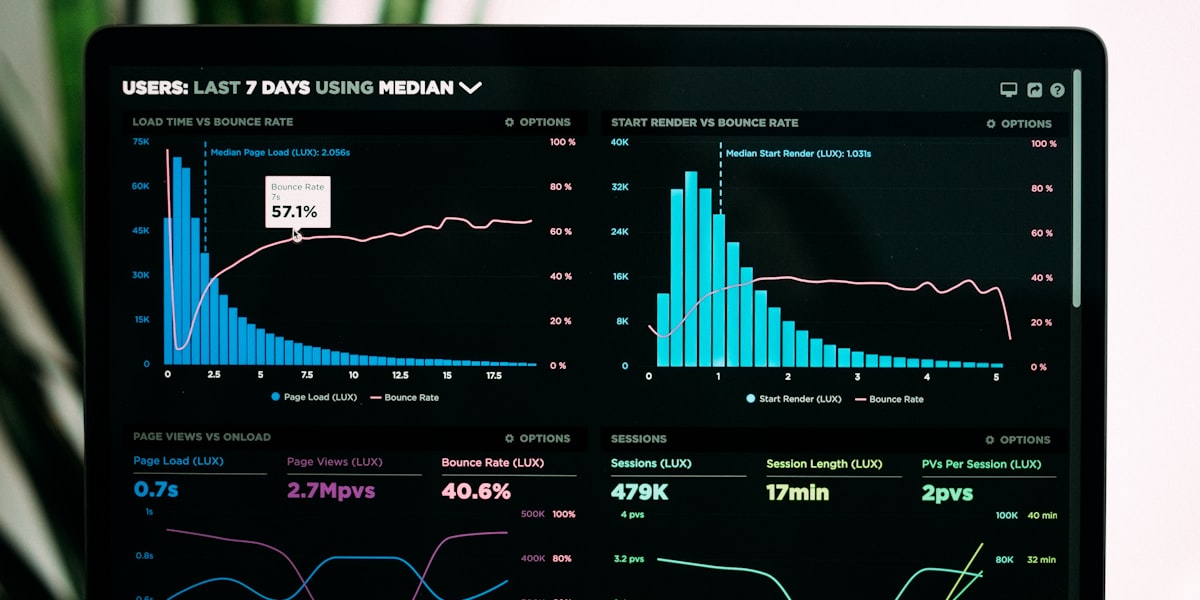
Sentiment Analysis
Last 7 days
Detection accuracy metrics
Start with the basics. What percentage of emotional states does the system correctly identify? Current benchmarks, per the IEMOCAP and RAVDESS datasets:
| Emotion Type | Expected Accuracy | Notes |
|---|---|---|
| Basic (happy, sad, angry, neutral) | 70-85% | On clean audio |
| Complex (sarcasm, mixed, suppressed) | 55-70% | Requires multimodal analysis |
| Domain-specific (service frustration) | 75-90% | With fine-tuned models |
But accuracy alone isn't enough. You need confusion matrix analysis — which emotions get confused with which? Anger and frustration frequently swap (functionally similar, different optimal responses). Sadness and neutral blur together. Understanding your confusion patterns tells you where to focus improvement.
False positive/negative asymmetry
Different applications have wildly different cost structures for mistakes. A false positive on frustration detection (adapting empathy when unnecessary) is low-cost — the customer gets slightly more acknowledgment than needed. A false negative on crisis detection (missing severe distress) can be catastrophic. Your detection thresholds should reflect this asymmetry.
Demographic fairness
This is non-negotiable. Early emotion recognition systems showed 10-20 percentage point accuracy gaps across gender, age, and cultural groups, as documented in research from the ACM Conference on Fairness, Accountability, and Transparency. Modern fairness-aware training reduces but doesn't eliminate these disparities. You need systematic fairness testing across demographics before any production deployment.
If you're building evaluation frameworks for agent behavior — emotional or otherwise — the same principles from building an eval framework for AI agents apply here. Structured rubrics, diverse test sets, and automated scoring pipelines beat manual spot-checking every time.
For scorecard-based quality systems, emotion-appropriateness becomes another dimension in your rubric — scored independently alongside accuracy, completeness, and policy adherence.
The Ethics You Can't Ship Without Addressing
Emotion AI touches something deeply personal. Detecting and responding to someone's emotional state creates obligations that pure information retrieval doesn't. Ship this wrong and you don't just get bad PR — you erode the trust that makes AI adoption possible at all.
Consent and transparency
Should customers know their emotions are being analyzed? The pragmatic answer: yes, and increasingly by law. The EU AI Act classifies emotion recognition in workplace and educational contexts as high-risk, with transparency requirements that are likely to expand. Regardless of current legal mandates, Pew Research (2024) found that 81% of Americans feel the risks of AI data collection outweigh the benefits. Transparency about emotion analysis builds the trust that makes customers willing to interact with your AI in the first place.
Data minimization
Process emotion signals in real-time for response adaptation. Don't store detailed emotional profiles unless you have a specific, disclosed reason. Edge processing enables emotion-aware responses without building a centralized database of everyone's emotional patterns. If you retain emotion data for analytics, aggregate it — category-level trends across your population, not individual emotional dossiers.
The manipulation line
This is the hardest question. Emotion detection can be used to help a frustrated customer faster — or to detect vulnerability and push a more expensive product. The technical capability is identical. The ethical difference is enormous.
Governance guardrails you need before deploying:
- Purpose limitation — emotion data used only for response quality, never for upselling or profiling
- Vulnerable population protections — additional safeguards for elderly users, children, or those in emotional distress
- Algorithmic accountability — log emotion detections and the decisions they drove, enabling audit and appeal
- Regular fairness audits — quarterly evaluation of detection accuracy across demographic groups
The OECD's AI Principles and IEEE's Ethically Aligned Design framework both provide detailed guidance here. The teams that treat ethics as a shipping requirement — not a nice-to-have — are the ones building products that last.
Technical Barriers That Remain Unsolved
Emotion AI has real limitations, and pretending otherwise sets you up for production failures. Here's what's genuinely hard today.
Cross-cultural variation
Emotional expression isn't universal. Vocal expressiveness that reads as strong emotion in one culture is normal baseline in another. Research from Elfenbein and Ambady's meta-analysis and more recent work in the Journal of Cross-Cultural Psychology shows 15-30 percentage point accuracy drops when models trained on one cultural population evaluate another. There's no shortcut — you need diverse training data and potentially culture-specific detection models.
Acoustic degradation
That 80% accuracy number? It assumes clean audio. Add background noise, poor microphone quality, strong accents, or speech disorders, and accuracy drops to 60-65%. Robust production systems need acoustic condition detection to calibrate confidence appropriately — knowing when not to trust the emotion signal is as important as the signal itself.
Context dependency
The same expression means different things in different contexts. Laughter might signal happiness, nervous deflection, or sarcasm. Anger might target the AI system or an external situation the customer is venting about. Sarcasm deliberately inverts the relationship between words and tone. Context-aware systems that consider conversation history and domain knowledge improve accuracy by 15-25% over context-free approaches — but they're more complex to build, test, and maintain.
Individual variation
People express emotions differently. Some are vocally expressive; others are flat-affect communicators who feel intense emotion without vocal markers. Population-average models underperform at both extremes. User-adaptive models that calibrate to individual expression patterns improve accuracy by 10-20 percentage points, but require enough interaction history for personalization — a cold-start problem for new callers.
What's Coming Next
The trajectory is clear: emotion detection gets more accurate, more multimodal, and more deeply integrated into agent behavior. Several near-term developments worth watching:
Physiological integration. Wearable devices measuring heart rate variability, skin conductance, and respiratory patterns add signal channels that voice alone can't provide. Apple Watch and similar devices already capture some of these signals. Multimodal systems combining voice, language, and physiological data could push detection accuracy above 90% for basic emotions.
Predictive emotional intelligence. Detecting current emotional state is table stakes. Predicting emotional trajectory — catching the early markers of frustration before the customer is consciously aware of it — enables preemptive de-escalation. Early research from Hume AI and academic groups at Carnegie Mellon shows promising results on trajectory prediction from acoustic features alone.
Personality-adaptive models. Rather than population averages, systems that learn individual communication styles and emotional baselines provide more accurate, personalized detection. Privacy-preserving on-device learning could enable this without centralized emotional profiling — a requirement for any ethically sound implementation.
Generative emotional responses. Current systems adapt within predefined templates. Generative AI will produce emotionally-appropriate responses dynamically, matching tone, content, and style to emotional context with nuance that template systems can't achieve. This is where prompt management intersects with emotion detection — the agent's personality and response patterns need to be tunable, not hardcoded.
The organizations building production observability into their voice AI today are the ones who'll be able to adopt these capabilities fastest. You can't tune what you can't measure, and emotional intelligence is about to become the dimension that separates AI experiences that feel human from ones that feel like talking to a vending machine.
From Detection to Action: Making It Real
Emotional intelligence isn't a feature you bolt on. It's an architecture decision that touches every layer of your agent — from the acoustic pipeline to the response generator to the monitoring system tracking whether your adaptations actually help.
The teams winning here aren't the ones with the most sophisticated detection models. They're the ones with the tightest loop between detection, adaptation, measurement, and improvement. They detect frustration, adapt the response, measure whether satisfaction improved, and feed that signal back into their models. It's a flywheel, and the teams that spin it fastest build agents that genuinely feel like they understand.
The technology is production-ready for most applications today. The ethics and governance frameworks are maturing. The remaining question isn't whether to deploy emotion-aware AI — it's whether you can afford not to while your competitors already are.
See what your agents are missing
Chanl's conversation intelligence shows you how customers actually feel during AI interactions — with real-time sentiment tracking, quality scoring, and the analytics to prove your agents are improving.
Start building free- Qualtrics XM Institute — Global Consumer Trends 2024
- NICE CXone Report — State of CX Transformation 2024
- Genesys — State of Customer Experience Report 2024
- Observe.AI — Sentiment Analysis in the Contact Center
- CallMiner — Guide to Customer Emotion Analytics
- McKinsey — The Future of Customer Experience in Banking
- Pew Research — Americans and AI: Use, Attitudes, and Trust (2024)
- Elfenbein & Ambady — On the Universality and Cultural Specificity of Emotion Recognition (Psychological Bulletin)
- IEMOCAP — Interactive Emotional Dyadic Motion Capture Database (USC SAIL Lab)
- RAVDESS — Ryerson Audio-Visual Database of Emotional Speech and Song
- SemEval — International Workshop on Semantic Evaluation (Shared Tasks)
- ACM FAccT — Conference on Fairness, Accountability, and Transparency
- Hume AI — Research on Expressive Communication and Emotion AI
- OECD AI Principles — Recommendation of the Council on Artificial Intelligence
- IEEE Ethically Aligned Design — A Vision for Prioritizing Human Well-being with AI
- IEEE Transactions on Affective Computing — Multimodal Emotion Recognition Surveys
- JMIR Mental Health — Voice Biomarkers for Depression and Anxiety Screening
- ACL Anthology — Context-Aware Sentiment Analysis Research
- ICASSP 2024 — IEEE International Conference on Acoustics, Speech and Signal Processing
Co-founder
Building the platform for AI agents at Chanl — tools, testing, and observability for customer experience.
Learn Agentic AI
One lesson a week — practical techniques for building, testing, and shipping AI agents. From prompt engineering to production monitoring. Learn by doing.